By Mike Thomson
Presenter, Document, Radio 4
Nearly a century ago, Britain was accused of masterminding a failed plot to kill Lenin and overthrow his fledgling Bolshevik regime. The British government dismissed the story as mere Soviet propaganda - but new evidence suggests it might be true.
For decades what became known as the "Lockhart plot" has been etched in the annals of the Soviet archives, taught in schools and even illustrated in films.
In early 1918, in the final months of World War I, Russia's new Bolshevik government was negotiating a peace deal with Germany and withdrawing its exhausted troops from the front.
This did not please London. The move would enable Berlin - which had been fighting a war on two fronts - to reinforce its forces in the West.
Determined to get the Russians back into the war on the Allied side, the British despatched a young man in his 30s to be London's representative in Moscow.
His name was Robert Bruce Lockhart.
Supporting anti-Bolsheviks
Lockhart, a Scot, was a colourful character. Known for his love of wine, women and sports, he also prided himself on his alleged ability to read five books at the same time.
At first, the well-read Lockhart seemed to be making progress on the issue but, in March that year, the Soviets signed the Brest-Litovsk peace treaty with Germany, so ending hope of them rejoining the war with the Allies.
Lockhart, it seems, had no intention of giving up.
Instead, the suggestion is, his attention was now turning to overthrowing the Bolshevik regime and replacing it with another government that would be willing to re-enter the war against Germany.
Documents show that, in June, Lockhart asked London for money to fund various anti-Bolshevik organisations in Moscow.
This letter, marked "urgent", was sent from the Foreign Office to the Treasury. It sums up the Foreign Secretary's attitude to the Moscow's representative's request:
"Mr. Balfour is of the opinion that the moment has arrived when it has become necessary to take this action, and I am to request that you will move the Lords Committee to give the necessary sanction for the expenditure of such funds as Mr. Lockhart can collect for this purpose."
Counter-revolution
In late May, the British decided to send a small military force to Archangel in northern Russia.
The official line was that the troops were going to prevent thousands of tonnes of British military equipment, supplied to the Russians, from falling into German hands.
However, documents from the day suggest that plans were later drawn up for these 5,000 British troops to join forces with 20,000 crack Latvian troops who were guarding the Kremlin but could, it was thought, be turned against the Bolsheviks.
In the summer of 1918, Lockhart sent a telegram to London following a meeting with a local opponent of the Bolsheviks called Savinkov.
It read: "Savinkov's proposals for counter-revolution. Plan is how, on Allied intervention, Bolshevik barons will be murdered and military dictatorship formed."
Underneath that telegram is a note bearing the signed initials of Lord Curzon, who was then a member of the British War Cabinet.
It says: "Savinkoff's methods are drastic, though if successful probably effective, but we cannot say or do anything until intervention has been definitely decided upon."
'Ace of Spies'
 Meanwhile Lockhart had teamed up in Moscow with another highly colourful character.
Sidney Reilly, a Russian who had earlier changed his name from Rosenbloom, was a flamboyant, high-rolling entrepreneur who had recently begun working for the British Secret Services.
He became known as the Ace of Spies, made famous in books of derring-do, and was even credited as being the inspiration for Alexander Fleming's James Bond.
But both were soon in for a shock.
In the late summer of 1918, an attempt was made in Moscow to assassinate Lenin. He was shot twice from close range by a young Russian woman.
The Bolshevik's secret police, the Cheka, arrested Bruce Lockhart a few hours later and he was taken to the Kremlin for questioning.
Reilly escaped the Cheka's clutches on that occasion but was shot dead several years later after being lured back into Russia.
According to Cheka records, Lockhart confessed to being part of a plot proposed by London to kill Lenin and overthrow the Bolshevik government. But in early October 1918, Britain's representative to Moscow was freed in an exchange for his Russian counterpart in London.
'Economical with the truth'
In his best selling book, Memoirs of a British Agent published in the 1930s, Lockhart insisted that he had played no part either in attempts to kill Lenin or overthrow the Bolshevik government.
Instead, he insisted that the maverick "Ace of Spies" Sidney Reilly was the man behind plans for a coup.
Lockhart added that he had little to do with Reilly who some claimed was out of control.
However, a letter written by Lockhart's son, Robin, has been discovered in archives in America. It suggests that his father was being rather economical with the truth:
"If the question of my father's relationship with Reilly still exercises anyone's mind in the F.O., it is clear from his book Memoirs of a British Agent that once intervention in Russia had been decided on in 1918, he gave his active support to the counter-revolutionary movement with which, of course, Reilly was actively working.
"My father has himself made it clear to me that he worked much more closely with Reilly than he had publicly indicated…"
Whitehall 'pretence'
The man who found that letter, Professor Robert Service, believes the only way to be sure of the truth would be to gain access to the rest of the files from the day.
But, more than 90 years later, the British government continues to keep many of them secret. All, in Robert Service's view, to maintain the myth that Lockhart-style plots have not - nor ever would be - countenanced by London.
"Britain today has a policy for its intelligence services that is openly averse to subverting foreign governments or assassinating foreign political leaders," he says.
"My guess is that the thinking in Whitehall is that the pretence ought to be that this has always been the case. That the British have always been clean.
"The British haven't always been clean. They have been as dirty as anyone else."
Document: The Lockhart Plot will be broadcast on Monday 21 March at 2000 GMT on BBC Radio 4 and will also be available on the BBC iPlayer
Presenter, Document, Radio 4
 Lenin survived an assassination attempt in 1918 although he was badly wounded |
For decades what became known as the "Lockhart plot" has been etched in the annals of the Soviet archives, taught in schools and even illustrated in films.
In early 1918, in the final months of World War I, Russia's new Bolshevik government was negotiating a peace deal with Germany and withdrawing its exhausted troops from the front.
This did not please London. The move would enable Berlin - which had been fighting a war on two fronts - to reinforce its forces in the West.
Determined to get the Russians back into the war on the Allied side, the British despatched a young man in his 30s to be London's representative in Moscow.
His name was Robert Bruce Lockhart.
Supporting anti-Bolsheviks
Lockhart, a Scot, was a colourful character. Known for his love of wine, women and sports, he also prided himself on his alleged ability to read five books at the same time.
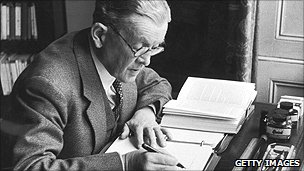 Robert Bruce Lockhart in 1955 |
Lockhart, it seems, had no intention of giving up.
Instead, the suggestion is, his attention was now turning to overthrowing the Bolshevik regime and replacing it with another government that would be willing to re-enter the war against Germany.
Documents show that, in June, Lockhart asked London for money to fund various anti-Bolshevik organisations in Moscow.
This letter, marked "urgent", was sent from the Foreign Office to the Treasury. It sums up the Foreign Secretary's attitude to the Moscow's representative's request:
"Mr. Balfour is of the opinion that the moment has arrived when it has become necessary to take this action, and I am to request that you will move the Lords Committee to give the necessary sanction for the expenditure of such funds as Mr. Lockhart can collect for this purpose."
Counter-revolution
Timeline |
The official line was that the troops were going to prevent thousands of tonnes of British military equipment, supplied to the Russians, from falling into German hands.
However, documents from the day suggest that plans were later drawn up for these 5,000 British troops to join forces with 20,000 crack Latvian troops who were guarding the Kremlin but could, it was thought, be turned against the Bolsheviks.
In the summer of 1918, Lockhart sent a telegram to London following a meeting with a local opponent of the Bolsheviks called Savinkov.
It read: "Savinkov's proposals for counter-revolution. Plan is how, on Allied intervention, Bolshevik barons will be murdered and military dictatorship formed."
Underneath that telegram is a note bearing the signed initials of Lord Curzon, who was then a member of the British War Cabinet.
It says: "Savinkoff's methods are drastic, though if successful probably effective, but we cannot say or do anything until intervention has been definitely decided upon."
'Ace of Spies'
 Meanwhile Lockhart had teamed up in Moscow with another highly colourful character.
Sidney Reilly, a Russian who had earlier changed his name from Rosenbloom, was a flamboyant, high-rolling entrepreneur who had recently begun working for the British Secret Services.
He became known as the Ace of Spies, made famous in books of derring-do, and was even credited as being the inspiration for Alexander Fleming's James Bond.
But both were soon in for a shock.
In the late summer of 1918, an attempt was made in Moscow to assassinate Lenin. He was shot twice from close range by a young Russian woman.
The Bolshevik's secret police, the Cheka, arrested Bruce Lockhart a few hours later and he was taken to the Kremlin for questioning.
Reilly escaped the Cheka's clutches on that occasion but was shot dead several years later after being lured back into Russia.
According to Cheka records, Lockhart confessed to being part of a plot proposed by London to kill Lenin and overthrow the Bolshevik government. But in early October 1918, Britain's representative to Moscow was freed in an exchange for his Russian counterpart in London.
'Economical with the truth'
In his best selling book, Memoirs of a British Agent published in the 1930s, Lockhart insisted that he had played no part either in attempts to kill Lenin or overthrow the Bolshevik government.
 |
Lockhart added that he had little to do with Reilly who some claimed was out of control.
However, a letter written by Lockhart's son, Robin, has been discovered in archives in America. It suggests that his father was being rather economical with the truth:
"If the question of my father's relationship with Reilly still exercises anyone's mind in the F.O., it is clear from his book Memoirs of a British Agent that once intervention in Russia had been decided on in 1918, he gave his active support to the counter-revolutionary movement with which, of course, Reilly was actively working.
"My father has himself made it clear to me that he worked much more closely with Reilly than he had publicly indicated…"
Whitehall 'pretence'
The man who found that letter, Professor Robert Service, believes the only way to be sure of the truth would be to gain access to the rest of the files from the day.
But, more than 90 years later, the British government continues to keep many of them secret. All, in Robert Service's view, to maintain the myth that Lockhart-style plots have not - nor ever would be - countenanced by London.
"Britain today has a policy for its intelligence services that is openly averse to subverting foreign governments or assassinating foreign political leaders," he says.
"My guess is that the thinking in Whitehall is that the pretence ought to be that this has always been the case. That the British have always been clean.
"The British haven't always been clean. They have been as dirty as anyone else."
Document: The Lockhart Plot will be broadcast on Monday 21 March at 2000 GMT on BBC Radio 4 and will also be available on the BBC iPlayer


