Monday, February 28, 2011

Gaddafi unflinching as rebel city fears counter-attack


People Power

Việt Nam hãy học bài học Tunisia, Egypt
Free the people, Free yourself

"Those who make peaceful revolution impossible,
make violence inevitable." - John F. Kennedy


Peaceful Revolution Hopeless
Non-violence Hopeless With Vietnam Communists


Tự do không phải ngồi đó mà có,
phải trả giá bằng sự quyết tâm, bằng xương, bằng máu ..
không phải van xin, thắp nến hiệp thông,
cầu nguyện chỉ có ở trong chùa chiền, nhà thờ.
teolangthang

****


Anti-government tribal rebels prepare for possible attacks by pro-Gaddafi loyalists
at a checkpoint in Ajdabiya area, 150 km (93.2 miles) southwest of Benghazi
February, 27, 2011.

By Maria Golovnina Maria Golovnina
TRIPOLI | Mon Feb 28, 2011


TRIPOLI (Reuters) – Libyan rebels awaited a counter-attack by Muammar Gaddafi's forces on Monday, after the country's leader defied demands that he quit to end the bloodiest of the Arab world's wave of uprisings.

Rebels holding Zawiyah, only 50 km (30 miles) west of Tripoli, said about 2,000 troops loyal to Gaddafi had surrounded the city.

"We will do our best to fight them off. They will attack soon," said a former police major who switched sides and joined the rebellion. "If we are fighting for freedom, we are ready to die for it."

Gaddafi is fighting a rebellion which has swept through his Mediterranean oil producing nation after uprisings toppled entrenched leaders in neighboring Tunisia and Egypt. His fierce crackdown has killed hundreds, triggering U.N. sanctions and Western condemnation, but has not turned the tide of protests.

Residents even in parts of the capital Tripoli have thrown up barricades against government forces. A general in the east of the country, where Gaddafi's power has evaporated, told Reuters his forces were ready to help rebels in the west.

"Our brothers in Tripoli say: "We are fine so far, we do not need help'. If they ask for help we are ready to move," said General Ahmed el-Gatrani, one of most senior figures in the mutinous army in Benghazi.

Analysts say they expect rebels eventually to take the capital and kill or capture Gaddafi, but add that he has the firepower to foment chaos or civil war -- a prospect he and his sons have warned of.

Monday looked likely to see nervousness in oil markets. NYMEX crude for April delivery was up $1.38 at $99.25 per barrel at 0722 GMT. Libya pumps only 2 percent of world oil and Saudi Arabia has boosted output, but traders fear turmoil intensifying in the Arab world.

Serbian television quoted Gaddafi as blaming foreigners and al Qaeda for the unrest and condemning the U.N. Security Council for imposing sanctions and ordering a war crimes inquiry.

"The people of Libya support me. Small groups of rebels are surrounded and will be dealt with," he said.

STAND DOWN CALLS

European powers said it was time for Gaddafi to stand down and Secretary of State Hillary Clinton said the United States was "reaching out" to opposition groups.

Residents of Zawiyah told of fierce fighting against pro-Gaddafi paramilitaries armed with heavy weapons.

"Gaddafi is crazy. His people shot at us using rocket-propelled grenades," said a man who gave his name as Mustafa. Another man called Chawki said: "We need justice. People are being killed. Gaddafi's people shot my nephew."

There were queues outside banks in Tripoli on Sunday for the 500 Libyan dinars ($400) the government had promised it would start distributing to each family.

From Misrata, a city 200 km (120 miles) east of Tripoli, residents said by phone a thrust by forces loyal to Gaddafi, operating from the airport, had been rebuffed with bloodshed.

But Libyan exile groups said later aircraft were firing on the city's radio station.

In the eastern city of Benghazi, opponents of the 68-year-old leader said they had formed a National Libyan Council to be the "face" of the revolution, but it was unclear who they represented.

They said they wanted no foreign intervention and had not made contact with foreign governments.

The "Network of Free Ulema," claiming to represent "some of Libya's most senior and most respected Muslim scholars," issued a statement urging "total rebellion" and endorsing the formation of an "interim government" announced two days ago.

FOREIGN WORKERS STRANDED

Western leaders, emboldened by evacuations that have brought home many of their citizens from the vast desert state, spoke out more clearly than before against Gaddafi.

"We have reached, I believe, a point of no return," Italy's Foreign Minister Franco Frattini said, adding it was "inevitable" that Gaddafi would leave power.

Britain revoked Gaddafi's diplomatic immunity and said it was freezing his family's assets. "It is time for Colonel Gaddafi to go," Foreign Secretary William Hague said.

Britain's former prime minister, Tony Blair, said he had spoken to Gaddafi on Friday and told him to go. Blair helped end the Western isolation of Gaddafi after he agreed to renounce weapons of mass destruction, paving the way for big British business deals in Libya.

Three British military planes evacuated 150 civilians from Libya's desert on Sunday, after a similar operation on Saturday.

Wealthy states have sent planes and ships to bring home expatriate workers but many more, from poorer countries, are stranded. Thousands of Egyptians streamed into Tunisia on Sunday, complaining Cairo had done nothing to help them.

Malta said it had refused a Libyan request to return two warplanes brought to the island by defecting pilots last Monday.

Gaddafi, once branded a "mad dog" by Washington for his support of militant groups worldwide, had been embraced by the West in recent years in return for renouncing some weapons programs and, critically, for opening up Libya's oilfields.

While money has flowed into Libya, many people, especially in the long-restive and oil-rich east, have seen little benefit and, inspired by the popular overthrow of veteran strongmen in neighboring Tunisia and Egypt, they rose up to demand better conditions and political freedoms.

(Additional reporting by Yvonne Bell and Chris Helgren in Tripoli, Marie-Louise Gumuchian and Souhail Karam in Rabat, Dina Zayed and Caroline Drees in Cairo, Tom Pfeiffer, Alexander Dziadosz and Mohammed Abbas in Benghazi, Arshad Mohammed in Washington and Louis Charbonneau at the United Nations; writing by Dominic Evans; editing by Tim Pearce)


Saturday, February 26, 2011

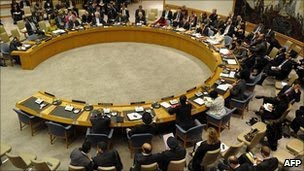
UN debates steps against Gaddafi


People Power

Việt Nam hãy học bài học Tunisia, Egypt
Free the people, Free yourself

"Those who make peaceful revolution impossible,
make violence inevitable." - John F. Kennedy


Peaceful Revolution Hopeless
Non-violence Hopeless With Vietnam Communists


Tự do không phải ngồi đó mà có,
phải trả giá bằng sự quyết tâm, bằng xương, bằng máu ..
không phải van xin, thắp nến hiệp thông,
cầu nguyện chỉ có ở trong chùa chiền, nhà thờ.
teolangthang

****
    Gaddafi must 'leave now': US President Barack Obama
From correspondents in Washington, AFP
February 27, 2011

PRESIDENT Barack Obama says that Libya's leader Muammar Gaddafi needs to "leave now," having lost the legitimacy to rule, a White House statement says.

Obama took the position - his most direct yet - in a telephone call with German Chancellor Angela Merkel, the statement said.

"The President stated that when a leader's only means of staying in power is to use mass violence against his own people, he has lost the legitimacy to rule and needs to do what is right for his country by leaving now," it said.

***
    Gaddafi in spotlight at UN Security Council
Source: http://www.bbc.co.uk/news/world-africa-12587078

The UN Security Council is meeting to consider action against Colonel Muammar Gaddafi's government in Libya over its attempts to put down an uprising.

UN Secretary General Ban Ki-moon has
demanded "decisive action" from the
Security Council
A draft resolution calls for an arms embargo, travel ban and asset freeze.

It also proposes referring Col Gaddafi to the International Criminal Court for alleged crimes against humanity.

Meanwhile, one of Col Gaddafi's sons, Saif al-Islam, has insisted that normal life continues in three-quarters of Libya.

Anti-Gaddafi forces say they control 80% of the country, including the second city Benghazi, but the Libyan leader still controls the capital Tripoli, home to two million of the country's 6.5 million population.

The UN estimates more than 1,000 people have died in the 10-day-old revolt.

The global body's World Food Programme has warned that the food distribution system is "at risk of collapsing" in the North African nation, which is heavily dependent on imports.

UN Secretary General Ban Ki-moon has demanded "decisive action" over the Libya crisis by the Security Council. The draft resolution it is considering is backed by Britain, France, Germany and the US.

The Libyan delegation at the UN has sent a letter to the Security Council backing measures to hold to account those responsible for armed attacks on Libyan civilians, including action through the International Criminal Court.

The BBC's UN correspondent Barbara Plett says the main point of contention in the draft resolution is the proposal to refer Libya to the court, so the Libyan delegation statement will put pressure on those in the council who oppose the reference or want to water it down.

The US has already imposed sanctions against Libya, and closed its embassy in Tripoli.

President Barack Obama signed an executive order on Friday freezing assets held in the US by Col Gaddafi, members of his family and senior officials. The president said he was also seizing Libyan state property in the US, to prevent it being misappropriated by Tripoli.

Thousands of foreign nationals - many of them employed in the oil industry - continue to be evacuated from the country by air, sea and land.

Saturday saw two British military transport aircraft pick up about 150 foreign nationals in the desert south of the second city, Benghazi, and fly them to the Mediterranean island of Malta.

Britain also announced it had temporarily closed its embassy in Tripoli and pulled out its staff on the last UK government-chartered aircraft because of the deteriorating security situation.

Airport chaos

BBC Middle East editor Jeremy Bowen, at Tripoli airport, reports that about 10,000 people remain outside the terminal building and several thousand more are inside. He saw piles of discarded luggage and personal possessions, even TVs, abandoned by people who've been desperate to get out.

Most of the people trying to leave are Egyptians, and many of them told our correspondent they had been waiting there for seven days.

Friday saw Col Gaddafi make a defiant address to supporters in Tripoli, while on Saturday the al-Arabiya TV network broadcast an interview with his son, Saif al-Islam.

"What the Libyan nation is going through has opened the door to all options, and now the signs of civil war and foreign interference have started," said Saif Gaddafi.

"An agreement has to be reached because the people have no future unless they agree together on a new programme."

Friday saw reports of anti-government demonstrators in several areas of Tripoli coming under fire from government troops and pro-Gaddafi militiamen, but on Saturday the capital city was calm, with shops open and people on the streets.

A Libyan journalist told the BBC that supporters of Colonel Gaddafi were occupying central Green Square in a public show of support.

Outside the capital, anti-Gaddafi protesters are consolidating their power in Benghazi. Leaders of the uprising are setting up committees to run the city and deliver basic services.

It is believed that rebels are fighting units of the regular army in the western cities of Misrata and Zawiya.
***
    Australia imposes sanctions on Libya
AAP, February 27, 2011

AUSTRALIA has imposed its first sanctions on Libya, placing a travel ban and an arms embargo on Muammar Gaddafi and his close circle of cronies.

It means Gaddafi, members of his family and the regime's senior military and security personnel are prohibited from entering or transiting in Australia.

Foreign Minister Kevin Rudd, currently in Cairo, said Gaddafi and his entourage are also banned from engaging in financial transactions with Australians.

It comes after the bloody authoritarian response to the civil uprising in Libya and no sign that Gaddafi is willing to relinquish his decades-long dictatorship.

"The Libyan regime's use of violence against its people is deeply disturbing and completely unacceptable" Mr Rudd said in a statement today.

"The time has come for Australia to reflect its grave concern by enacting these practical measures."

Mr Rudd also urged the UN Security Council to begin sanctions against the Libyan regime and to refer violence in the country to the International Criminal Court.

The US has also imposed sanctions on Libya.


Friday, February 25, 2011

UN chief urges action over Libya


People Power

Việt Nam hãy học bài học Tunisia, Egypt
Free the people, Free yourself

"Those who make peaceful revolution impossible,
make violence inevitable." - John F. Kennedy


Peaceful Revolution Hopeless
Non-violence Hopeless With Vietnam Communists


Tự do không phải ngồi đó mà có,
phải trả giá bằng sự quyết tâm, bằng xương, bằng máu ..
không phải van xin, thắp nến hiệp thông,
cầu nguyện chỉ có ở trong chùa chiền, nhà thờ.
teolangthang

****

Click to play

>


The BBC's Jeremy Bowen reporting from Tripoli says the uprising is spreading

Source: http://www.bbc.co.uk/news/world-africa-12585949

United Nations Secretary General Ban Ki-moon has urged the global body's Security Council to take "decisive action" over the Libya crisis.

He said violations of human rights had been carried out by Muammar Gaddafi's regime, and more than 1,000 had died.

Speaking at a meeting of the Security Council in New York, Mr Ban warned of a growing refugee and food crisis.

In Libya, reports say anti-government protesters in the capital Tripoli came under heavy gunfire on Friday.

Witnesses reported deaths and injuries as militiamen and government troops confronted protesters as they emerged from mosques following Friday prayers and started demonstrating in several areas of the city.

At the same time, Libyan state TV showed Colonel Gaddafi speaking from the Tripoli's old city ramparts, urging the crowd to arm themselves and defend the nation and its oil against the anti-Gaddafi elements who have taken control of large parts of the country.

"We shall destroy any aggression with popular will," he said. "With the armed people, when necessary we will open the weapons depots. So that all the Libyan people, all the Libyan tribes can be armed. Libya will become a red flame, a burning coal."

Later, at a hastily organised news conference at the UN in New York, Libyan deputy ambassador Ibrahim Dabbashi described Col Gaddafi, who has been in power for 42 years, as a "madman". He warned that thousands would die in Tripoli because the Libyan leader would never flee and would fight to the end.

Much of the east of the country is in the hands of anti-Gaddafi protesters and units of the Libyan military that have crossed over to them.

Mr Ban said 22,000 people had fled Libya via Tunisia, and a further 15,000 via Egypt.

"Much larger numbers are trapped and unable to leave," he added. "There are widespread reports of refugees being harassed and threatened with guns and knives."

He said it was important for neighbouring countries, including those in Europe, to keep their borders open to those fleeing the violence.

Mr Ban also said that there was a food crisis inside Libya that the UN World Food Programme (WFP) expected to worsen. The WFP says Libya's food supply chain is at risk of collapse because imports have not been getting into the country and food distribution is hampered by violence.

Diplomats at the UN Security Council say Britain and France have drawn up a draft resolution with a package of measures aimed at isolating Libya's political and military leaders. Elements could include targeted sanctions, an arms embargo, and a proposed referral of the situation in Libya to the International Criminal Court.
'Exaggerated media campaign'

The BBC's Middle East editor Jeremy Bowen has entered the Libyan capital at the invitation of the Libyan government.

Saif al-Islam Gaddafi, son of the Libyan leader, told him that the reports of extreme violence were an "exaggerated media campaign" run by "hostile Arab TV channels".

It was not true that Libya had bombed civilians, Mr Gaddafi said, although he did say that the air force had bombed ammunition dumps that were in enemy hands.

Visitors to Tripoli would not hear gunfire but might hear fireworks, Mr Gaddafi said. He criticised the protesters, some of whom wanted an Islamic "Afghan solution" to the country's problems.

He admitted that the east of Libya was "a big mess". People were behind his father, Mr Gaddafi said, and would come out into the streets to support him.

White House spokesman Jay Carney said the Obama administration was acting "to put pressure on the regime" to cease the violence. "Colonel Gaddafi has lost the confidence of his people," he added.

Evacuations of foreign nationals from Libya by sea continued on Friday:

  • A US-chartered ferry carrying Americans evacuated from Libya arrived in Malta on Friday evening
  • Britain has sent a second ship, the destroyer HMS York, to deploy to the sea area near Libya; the frigate HMS Cumberland has picked up more than 200 people and is taking them to Malta
  • India is sending warships to the region to evacuate its nationals
Hundreds of sub-Saharan Africans are said to be fleeing southern Libya into Niger. Many more are stranded in Libya, where they say they are being attacked by people accusing them of being mercenaries fighting for Col Gaddafi.


U.S. to hit Libya with sanctions


Việt Nam hãy học bài học Tunisia, Egypt
Free the people, Free yourself

"Those who make peaceful revolution impossible,
make violence inevitable." - John F. Kennedy


Peaceful Revolution Hopeless
Non-violence Hopeless With Vietnam Communists


Tự do không phải ngồi đó mà có,
phải trả giá bằng sự quyết tâm, bằng xương, bằng máu ..
không phải van xin, thắp nến hiệp thông,
cầu nguyện chỉ có ở trong chùa chiền, nhà thờ.
teolangthang

****
    U.S. to hit Libya with sanctions, shuts embassy
Ross Colvin and Alister Bull, Reuters
February 26, 2011, 10:52 am

WASHINGTON (Reuters) - The United States announced on Friday it would soon impose sanctions on Libya and bluntly said the legitimacy of longtime Libyan leader Muammar Gaddafi had been "reduced to zero."

White House spokesman Jay Carney did not specify what the measures were or when they would be imposed but said the sanctions would be coordinated with European allies.

With the Libyan crisis also being taken up at the United Nations, European Union governments agreed on the idea of imposing an arms embargo, asset freezes and a travel ban on the oil-producing North African nation, with diplomats saying a formal decision would be taken early next week.

Washington announced the sanctions move -- along with the closing of its embassy and withdrawal of U.S. diplomats -- after a chartered ferry and a plane carrying Americans and other evacuees left Libya earlier on Friday.

The Obama administration had been criticized for its relatively restrained response so far to Gaddafi's bloody crackdown on an uprising against his four-decade rule.

But U.S. officials said fears for the safety of the Americans had tempered Washington's response to the turmoil.

"(Gaddafi) is overseeing the brutal treatment of his people ... and his legitimacy has been reduced to zero in the eyes of his people," Carney said after Libyan security forces shot protesters in the streets of Tripoli on Friday.

"We are initiating a series of steps at the unilateral level and multilateral level to pressure the regime in Libya to stop killing its own people."

President Barack Obama discussed Washington's sanctions plan with the leaders of Britain, France and Italy on Thursday and Turkish Prime Minister Tayyip Erdogan on Friday.

CLINTON TO DRUM UP SUPPORT

The Obama administration said earlier this week it was studying a wide range of options, including the freezing of assets, a travel ban on members of Gaddafi's government, a "no-fly" zone over Libya and military action.

In a first step, the U.S. Treasury has told American banks to closely monitor transactions that may be related to unrest in Libya for possible signs that state assets were being misappropriated.

Several U.S. energy companies in Libya -- including Marathon, Hess and Occidental -- have continued working through the crisis as other foreign firms have curtailed or suspended operations.

If sanctions gain traction internationally, then Libya's oil output could be restricted.

"Although Libya is not a big supplier to the U.S., any sanctions imposed by the U.S. -- particularly on doing business with that country -- means the U.S. or other countries affected will still have to tap other suppliers," said Peter Beutel, president of trading consultants Cameron Hanover.

In New York, the U.N. Security Council was considering a French-British draft proposal for an arms embargo, financial sanctions and a request to the International Criminal Court to indict Libyan leaders for crimes against humanity.

The White House did not express direct support for the proposal but said it was discussing it with members of the Security Council, including the other four permanent members -- China, Russia, Britain and France.

Secretary of State Hillary Clinton will push for unity against Gaddafi on Monday at the U.N. Human Rights Council.

Washington once dismissed the Geneva-based council as toothless but Charles Ries, director of the Centre for Middle East Public Policy at Rand Corporation, said it might be a good venue to build consensus.

"The U.N. Security Council is a very risky proposition if, for example, the Chinese were not in favour of voting a resolution, and I don't think the administration feels confident that it has all of those ducks lined up," Ries said.

The United States resumed diplomatic ties with Libya in 2004 after Gaddafi agreed to abandon his pursuit of weapons of mass destruction.

U.S. economic sanctions were progressively removed after Libya agreed to accept civil responsibility for the bombing of Pan Am Flight 103 over Scotland in 1988.
(Reporting by Jeff Mason, Patricia Zengerle, Alister Bull, Andrew Quinn, Paul Eckert, David Morgan and David Lawder and Luke Baker in Brussels; writing by Ross Colvin; Editing by John O'Callaghan and Peter Cooney)
***
    Gaddafi son says fighting limited, sees end soon
Maria Golovnina, Reuters
February 26, 2011, 11:27 am

TRIPOLI (Reuters) - A son of Libyan leader Muammar Gaddafi tried on Friday to minimise the extent of fighting with rebels who have seized much of the country, and said he expected negotiated ceasefires in two flashpoint cities within a day.

Speaking in English to foreign journalists flown to Tripoli under official escort, Saif al-Islam Gaddafi said rebels who surrendered would not be harmed and that Libya needed reforms.

His account of the state of the country, however, seemed at odds with the control exercised for the past few days in much of the east by groups intent on ending Gaddafi's 41-year rule and with reports from residents in and around the capital itself.

The London-educated younger Gaddafi said there was no violence outside two western cities and branded as "lies" media reports that troops bombed civilians or were using mercenaries.

"We are laughing at these reports," he said, speaking amiably but with passion, dressed in a sweater and jeans and plainly at ease in a luxury hotel.

"Apart from Misrata and Zawiya, everything is calm ... Negotiations are going on and we are optimistic," the 38-year-old Gaddafi said, while acknowledging trouble in the east. "Peace is coming back to our country," he said.

"In Misrata, in Zawiya, we have a problem. We are dealing with terrorists. But hopefully they are running out of ammunition. Hopefully there will be no more bloodshed. By tomorrow we will solve this. The army decided not to attack the terrorists, and to give a chance to negotiation. Hopefully we will do it peacefully and will do so by tomorrow."

Since revolt broke out last week following the toppling of veteran strongmen in neighbouring Egypt and Tunisia, the east of the country has slipped from the control of Gaddafi's forces and residents have reported fighting ever closer to Tripoli.

"DESPERATE"

Residents of Misrata, Libya's third largest city, and Zawiya in the west, have said opposition fighters have taken control and have beaten back counter-attacks by the army.

As journalists from Reuters and other news organisations were driven by Libyan officials from Tripoli airport into the city late on Friday, the streets of the capital seemed unusually empty for what is normally a busy part of the weekend.

Earlier in the day, residents spoke of fighting and of some areas appearing to be in the control of Gaddafi's opponents.

In a characteristic show of defiance, the 68-year-old Gaddafi appeared before thousands of supporters in the central Green Square to vow he would "crush any enemy."

His son said opposition leaders were in a weak position: "The top people in these groups are desperate. We are telling them -- lay down your arms and we will not harm you."

Earlier, Turkish television aired comments Saif al-Islam made on Thursday, including the defiant statement: "We have plans A, B and C. Plan A is to live and die in Libya. Plan B is to live and die in Libya. Plan C is to live and die in Libya."

On Friday, the younger Gaddafi, who was seen as a potential reformer before the revolt struck this month, told the news conference: "We believe we do need to reform our country. We need to introduce many reforms.

"We are strong. We are united, all fighting for our country. We are all united against dark forces," he said. "There is a big conspiracy against our country. There are countries behind this campaign. This is what's happening in the east. They want to introduce an Afghan model to Libya ... It's not a secret. Al Qaeda issued a statement supporting these groups.

"It was a mistake not to allow foreign journalists to visit," he said. "That gave a chance to hostile TV channels to say whatever they liked. We were the victim of the media.

"They want to show Libya is burning, that there is a big revolution there. You are wrong. We are united."

At several points, his remarks were interrupted by applause from journalists working for Libyan state controlled media.

(Writing by Alastair Macdonald, editing by Alison Williams)
***
    Thousands killed in Libya unrest, says deputy UN ambassador Ibrahim Dabbashi

From correspondents in Tripoli
From: AFP
February 26, 2011 7:02AM

THOUSANDS of people have been killed in the Libya unrest, but strongman Muammar Gaddafi may kill himself rather than be caught by his opponents, Libya's deputy UN ambassador says.

Protesters shot dead in Tripoli

A UN ambassador says thousands of people have been killed in Libya as Muammar Gaddafi hardens on opponents.
"There are already thousands of people who have been killed, we expect more," said the diplomat, Ibrahim Dabbashi, who has turned against the Gaddafi regime.

Mr Dabbashi said that Gaddafi is "psychologically unstable".

"Gaddafi has the choice between being killed or commit suicide," said the envoy.

"He might seek to send some of his family members abroad but I believe he prefers to die in Libya because of his narcissistic character - he wants to act like a hero," he said.

His comments came ahead of a UN Security Council meeting on the Libya crisis. Western nations are pressing for international sanctions against Gaddafi's regime to force an end to the violence, which other accounts say has left hundreds dead.

Mr Dabbashi said "the dictator regime in Tripoli is in its last moments" and that thousands of people have headed for the main Martyrs Square in Tripoli in a standoff with Gaddafi's forces.

"The dictator, to show that he is still in control, he took all his army and his defenders to occupy the square before them," Dabbashi said.

"At the same time he sent terrorists in front of the demonstrators and they are shooting on all the demonstrators, trying to prevent them to move to the Martyrs Square."

The envoy said there are "mercenaries" from Algeria, Tunisia, Mali, Niger, Chad and Ethiopia fighting with Gaddafi's forces.

The Libyan envoy said the international community has to "send a clear message" to Gaddafi to halt the violence.

"Otherwise I think he will continue his killings and today you will have thousands of people killed in Tripoli. It is time to stop this."

Dabbashi has previously called for the United Nations to order a no-fly zone over Libya to halt air attacks on demonstrators.

Gaddafis will 'live and die' in Libya

Gaddafi son, Seif al-Islam Gaddafi, said his family will stay in Libya at all costs despite a bloody uprising shaking his father's regime.

"Our plan is to live and die in Libya,'' he told Turkey's CNN Turk news channel when asked whether his family had a "plan B" in the face of the simmering turmoil in the north African country.

Speaking with a voiceover translation to Turkish, he admitted the regime had lost grip of eastern Libya, but said the authorities would soon regain control of the region.

"There are over two million people in this area, the number of terrorists is 200 or 300 at most. People call us and beg for help. ... We cannot allow a handful of terrorists to control that part of Libya and its people," he said.

"Not the army but the whole nation will resolve this problem," he said when asked whether the military could attack the flashpoint city of Benghazi.

Seif al-Islam also targeted the media and especially Arab news channel Al Jazeera for what he called "lies" on civilian deaths and the activities of African mercenaries helping the regime.

"All fabricated news come from one channel, Al Jazeera. We know the reason," he said, accusing the channel of "supporting" terrorist groups.

He blamed "small terrorist groups" for provoking the turmoil, insisting that the Gaddafi family had no problem with street demonstrations.

"Street protests, peaceful demonstrations, political demands ... these are acceptable. ... Our problem is armed groups. ... This is the greatest problem. Our problem is not political demands," he said.

He said insurgent groups in the cities of Zawiya and Misurata stole army tanks and possessed guns and ammunition.

"As government, we do not fight against our people, we fight against those groups," he said.

Asked whether his father planned to bomb oil refineries if the situation got worse, he said: "We will never destroy oil. It belongs to the people."